Why Does Your Breaker Keep Tripping? (Complete Troubleshooting Guide)
This article is general safety information for California homeowners. It is not legal, insurance, or code advice. Always confirm requirements with your local building department, utility, insurer, and a licensed electrician.
Breakers trip to protect your home from overloaded circuits, short circuits, or ground faults. If a breaker trips once, reset it; if it trips repeatedly, you likely have an overloaded circuit, failing appliance, damaged wiring, or a worn‑out breaker. In Santa Clara County homes, common culprits include space heaters (around 1,500W), microwaves (around 1,200W), and AC units plugged into undersized or shared circuits. A 15‑amp circuit safely handles about 1,800 watts; a 20‑amp circuit safely handles about 2,400 watts. If a breaker trips immediately when reset with nothing plugged in, stop resetting it and call an electrician.
Last Tuesday I got a call from a homeowner in Sunnyvale. Her kitchen breaker had tripped three times that morning. Microwave, coffee maker, toaster – all at once.
"Is my breaker bad?" she asked.
No. The breaker was the only thing doing its job. Her 1970s kitchen had a single 15‑amp circuit trying to carry roughly 3,000 watts.
This is what most people don't realize: the breaker is the symptom, not the problem. Here's how to figure out what's really going on in a Santa Clara County home.
If Your Breaker Keeps Tripping, Do This First
Before you pick up the phone:
- Unplug everything from that circuit (all outlets that die when the breaker trips).
- Reset the breaker correctly – push it all the way to OFF (past center), then back to ON.
- Plug things back in one at a time and run them for a few minutes. Note what combination causes the trip.
- Check for burning smells at outlets and at the panel.
- Look at the breaker size – is it a 15‑amp or 20‑amp (printed on the handle)?
If the breaker trips immediately when you reset it with nothing plugged in, don't keep flipping it. That's a call‑an‑electrician situation.
Why This Happens
Breakers trip for a few core reasons.
Overloaded Circuit (Most Common)
You're trying to pull more current than the breaker (and wire) are rated for:
- 15A circuit → ~1,800 watts
- 20A circuit → ~2,400 watts
It doesn't take much:
- Space heater: ~1,500W
- Hair dryer: ~1,500W
- Microwave: ~1,200W
Older Bay Area homes in Los Gatos, Campbell, and Willow Glen often have way too many outlets on one 15A circuit. Kitchens were wired for a percolator and toaster, not a microwave, air fryer, espresso machine, and Instant Pot all at once.
Short Circuit
A hot wire touches neutral or another hot directly. That creates a near‑instant current surge and trips the breaker fast.
Common causes:
- Pinched or damaged cables behind outlets or in walls
- Screws through wires during remodels
- Faulty appliances with internal failures
Shorts usually come with scorch marks, popping, or burning smells. If you see or smell that, shut the breaker off and call a pro.
Ground Fault
A hot wire touches a grounded surface – metal box, appliance housing, water pipe, wet area. Ground‑fault breakers (or GFCI breakers) trip to prevent shock.
These show up a lot in:
- Bathrooms and kitchens
- Garages
- Outdoor circuits around San Jose, Morgan Hill, and Gilroy
If a breaker tied to wet areas trips, moisture or a ground fault is high on the list.
Failing Appliance
Sometimes the wiring and breaker are fine. The appliance isn't.
Refrigerators, microwaves, window ACs, and older plug‑in heaters can develop internal faults that draw too much current or cause shorts.
A good test:
- Unplug the suspect appliance
- Reset the breaker
- Run everything else like normal
If the trips stop, you found your problem. Get the appliance repaired or replaced.
Bad Breaker
Breakers wear out. After 20+ years of use, internal contacts weaken and the breaker can trip at lower currents than it should.
We see this often in older Milpitas and San Jose homes with Federal Pacific, Zinsco, or Sylvania panels. Those brands have notoriously unreliable breakers.
Loose Connection at the Breaker
If the wire connection at the breaker terminal is loose, it creates heat and resistance. That can cause nuisance tripping even when the load is normal.
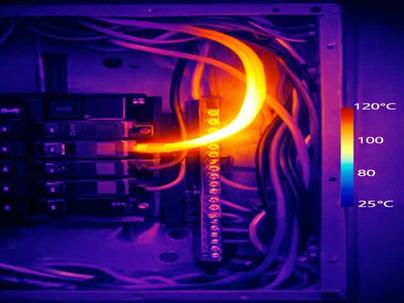
This is less common but shows up with aluminum wiring or poor installation. We use thermal imaging to find these hot spots.
Stop and Call an Electrician If…
Some patterns are urgent:
- Breaker trips immediately when reset (nothing plugged in)
- You smell burning or see smoke near the panel
- The breaker feels hot to the touch
- The breaker won't stay reset
- Scorch marks or discoloration on the breaker
- Breaker trips randomly, not tied to any device
- Multiple breakers trip at once
- Buzzing or crackling from the panel
- Same breaker trips daily
Any of these means the problem is beyond a simple overload.
Typical Cost in Santa Clara County (2026)
Fixing tripping breakers depends on the cause:
Simple Fix ($150–$400):
Replace a worn‑out breaker, redistribute loads between circuits, or repair a single loose connection. Quick fix if the breaker itself is the problem.
Typical Range ($600–$2,000):
Add a dedicated 20‑amp circuit for high‑draw appliances, replace damaged wiring in walls, or upgrade GFCI/AFCI breakers. Common for kitchens and laundries with inadequate circuits.
Complex Work ($3,000–$7,000):
Rewire multiple circuits, upgrade panel capacity, or address aluminum wiring issues. Required when the panel or wiring is outdated or code violations exist.
What drives the price:
- Cause of the problem (simple breaker swap vs. circuit rewiring)
- Access (easy breaker panel vs. opening walls)
- Number of circuits affected
- Code upgrades required (AFCI/GFCI protection)
- Permit requirements ($700–$950 in most Santa Clara County cities; Palo Alto ~$1,900)
An in‑person diagnosis is the only way to confirm pricing.
Do You Need a Permit?
Depends on the fix.
In Santa Clara County:
- No permit needed: Replacing a breaker (like‑for‑like, same amperage)
- Permit required: Adding new circuits, upgrading breaker amperage (15A to 20A), running new wire, or installing AFCI/GFCI breakers as code upgrades
Most breaker fixes that involve more than a simple swap require permits. Permitting timeline: 1–6 weeks total depending on the city.
How Electricians Fix This
Here's what we do to stop breaker trips:
Circuit Load Analysis
We measure current draw on the circuit under normal use and when appliances run. This tells us if the circuit is overloaded or if there's a fault.
For complex situations, we run a full load calculation per NEC Article 220 to see if your panel can handle current and planned loads.
Breaker Testing
We test the breaker with a load tester to see if it's tripping correctly or if it's worn out. Bad breakers get replaced with the exact same amperage rating.
Wiring Inspection
We check outlets, junction boxes, and wiring for damage, loose connections, or shorts. We use thermal imaging to find hot spots in walls or connections that aren't visible.
Appliance Isolation
We unplug appliances one by one to see if a specific device is causing the trip. If we find a faulty appliance, we recommend repair or replacement.
Dedicated Circuit Installation
If your circuit is overloaded, we run a new dedicated 20‑amp circuit for high‑draw appliances (microwave, refrigerator, window AC).
This separates the load and stops the tripping. Takes 2–4 hours per circuit plus permits if required.
GFCI/AFCI Troubleshooting
If a GFCI or AFCI breaker is tripping, we test for ground faults or arcing issues. Sometimes the breaker is too sensitive; other times there's a real fault. We determine which and fix accordingly.
Breaker Replacement
If the breaker is worn out, we swap it with a new one (same amperage). This is a quick fix but only works if the breaker itself is the problem. Takes 20–30 minutes.
FAQs
How many times can I reset a breaker before calling an electrician?
Once. If it trips a second time, stop resetting it and call a pro. Repeated resets can damage the breaker and create a fire hazard.
Can I just replace the breaker with a higher‑amp one?
No. Breakers must match the wire gauge. Putting a 20‑amp breaker on 14‑gauge wire (rated for 15 amps) is a fire hazard and code violation. The wire overheats before the breaker trips.
Why does the breaker trip when my AC starts?
AC units draw a lot of current at startup (30–50A for heat pump HVAC systems). If your AC is on an undersized or overloaded circuit, it'll trip the breaker. The AC may need its own dedicated circuit.
Why does my GFCI breaker trip randomly?
GFCI breakers trip when they detect a ground fault (current leaking to ground). This can be caused by moisture, damaged wiring, or a faulty appliance. We troubleshoot to find the source.
Can a bad breaker cause lights to flicker?
Not usually. Flickering is typically a voltage drop or loose connection issue, not a breaker problem. But if a breaker is loose in the panel, it can cause odd behavior.
Will upgrading to a larger panel stop breaker trips?
Only if your panel is maxed out and you need more circuits. A bigger panel gives you more capacity to add circuits, but it won't fix an overloaded existing circuit. You need to redistribute or add circuits.
How do I know if my breaker is bad?
If the breaker trips at lower loads than it should, feels loose, or won't reset properly, it's likely worn out. An electrician can test it to confirm.
Can I use a higher‑wattage appliance if I upgrade the breaker?
Only if the wiring is also upgraded. Breaker size must match wire gauge. If you want to run higher‑wattage devices, you need both a bigger breaker and heavier‑gauge wire.
Why do multiple breakers trip at once?
This usually indicates a major fault – short circuit at the panel, main breaker issue, or severe overload. This is an emergency. Don't reset the breakers; call an electrician immediately.
What's the difference between a 15A and 20A circuit?
A 15‑amp circuit uses 14‑gauge wire and can handle 1,800 watts continuous. A 20‑amp circuit uses 12‑gauge wire and can handle 2,400 watts continuous. You can tell by looking at the outlets – 20A circuits have a T‑shaped slot on the left side of the outlet.
Why does my breaker trip when it rains?
Water is getting into the circuit, causing a ground fault. This is most common with outdoor outlets, garage circuits, or old wiring with compromised insulation. Get it checked immediately – this is a shock hazard.
Why Homeowners in Santa Clara County Call Watson's
- Fast troubleshooting – we find the cause, not just the symptom
- Experienced with overloaded circuits in older Bay Area homes built before 1990
- Clean circuit installs with proper wire sizing and breaker matching
- Code‑compliant AFCI/GFCI upgrades when required
- Honest assessments – we don't upsell panel upgrades unless needed
- Licensed, insured, and up to date on California electrical code
- Gilroy‑based and serving all of Santa Clara County